Can Old Wiring Be Insured? What Insurers Check
A homeowner may not think about wiring until an insurance application asks its age. Then a simple question can affect closing on a house, renewing a policy, or receiving a claim payment after a fire: can old wiring be insured? Often, yes. But the answer depends on the wiring type, its condition, the property’s electrical capacity, and the insurance carrier’s underwriting rules.
For South Louisiana homes, old electrical systems deserve more than a quick look. Humidity, storm exposure, corrosion, additions built over decades, and rising power demands can turn an aging system into a serious safety and coverage concern. Insurance companies are not trying to make life difficult. They are measuring fire risk. A licensed electrical inspection gives you clear facts, practical options, and a safer path forward.
Can Old Wiring Be Insured? Yes, but It Depends
A house can have older wiring and still qualify for insurance. Age alone is not always disqualifying. Many well-maintained homes have electrical systems that remain safe and serviceable after decades of use.
The challenge starts when the wiring is a known high-risk type, the panel cannot safely support modern loads, repairs are visible, or inspection findings point to overheating and deterioration. In those situations, an insurer may decline coverage, exclude electrical-related losses, charge a higher premium, or offer conditional coverage that requires upgrades by a stated deadline.
Carriers vary. One insurer may accept a property after receiving proof of a panel replacement and electrical repairs. Another may require a full rewire before issuing a policy. Do not assume that a previous policy means the electrical system will pass every new insurer’s review, especially after a property purchase or a change in coverage.
Wiring Types That Raise Insurance Concerns
Insurance underwriters pay close attention to certain older materials and components because their failure patterns are well documented. An electrician can identify what is actually installed, since a home’s construction year does not always tell the full story. Previous owners may have completed partial updates, additions, or panel changes.
Knob-and-Tube Wiring
Knob-and-tube wiring was common in homes built before about 1950. It was designed for a different era, before central air conditioning, large kitchen appliances, electronics, EV chargers, and the electrical loads many households use now.
This system can become unsafe when insulation breaks down, circuits are overloaded, grounding is absent, or modern insulation has been placed around wiring that was designed to dissipate heat in open air. Some insurers will not write new policies on homes with active knob-and-tube wiring. Others may allow limited coverage only while replacement work is scheduled.
Aluminum Branch-Circuit Wiring
Some homes built primarily in the 1960s and 1970s use aluminum branch-circuit wiring. Aluminum itself is not automatically a failure, but connections can loosen or oxidize if the system was not installed and maintained with approved methods. That can create heat at outlets, switches, and connections.
An electrical inspection can determine whether aluminum wiring is present and whether a qualified repair method or full replacement is the right answer. Insurers often want documentation, not verbal assurance.
Federal Pacific, Zinsco, and Other Problem Panels
The panel is the control center of the electrical system. Certain older panel brands, including Federal Pacific Electric and Zinsco, are frequently flagged because breakers may not perform reliably during an overload or fault. Even if the house wiring is in reasonable condition, a panel issue alone can create an insurance obstacle.
A modern panel replacement can improve safety, support current code requirements, and provide capacity for future needs such as a generator connection, surge protection, or EV charging. It also gives an insurer a clear record that a major risk point has been addressed.
Deteriorated or Improperly Modified Wiring
Not every concern has a recognizable product name. Insurers and inspectors may flag brittle cloth-covered conductors, exposed splices, overloaded circuits, missing junction-box covers, ungrounded receptacles, water-damaged equipment, or DIY additions that were never properly permitted or inspected.
These conditions are especially relevant after flood events, roof leaks, storm damage, or long-term moisture exposure. Electrical problems can stay hidden behind walls until a connection overheats. That is not a risk worth guessing about.
What Insurers Usually Want to Know
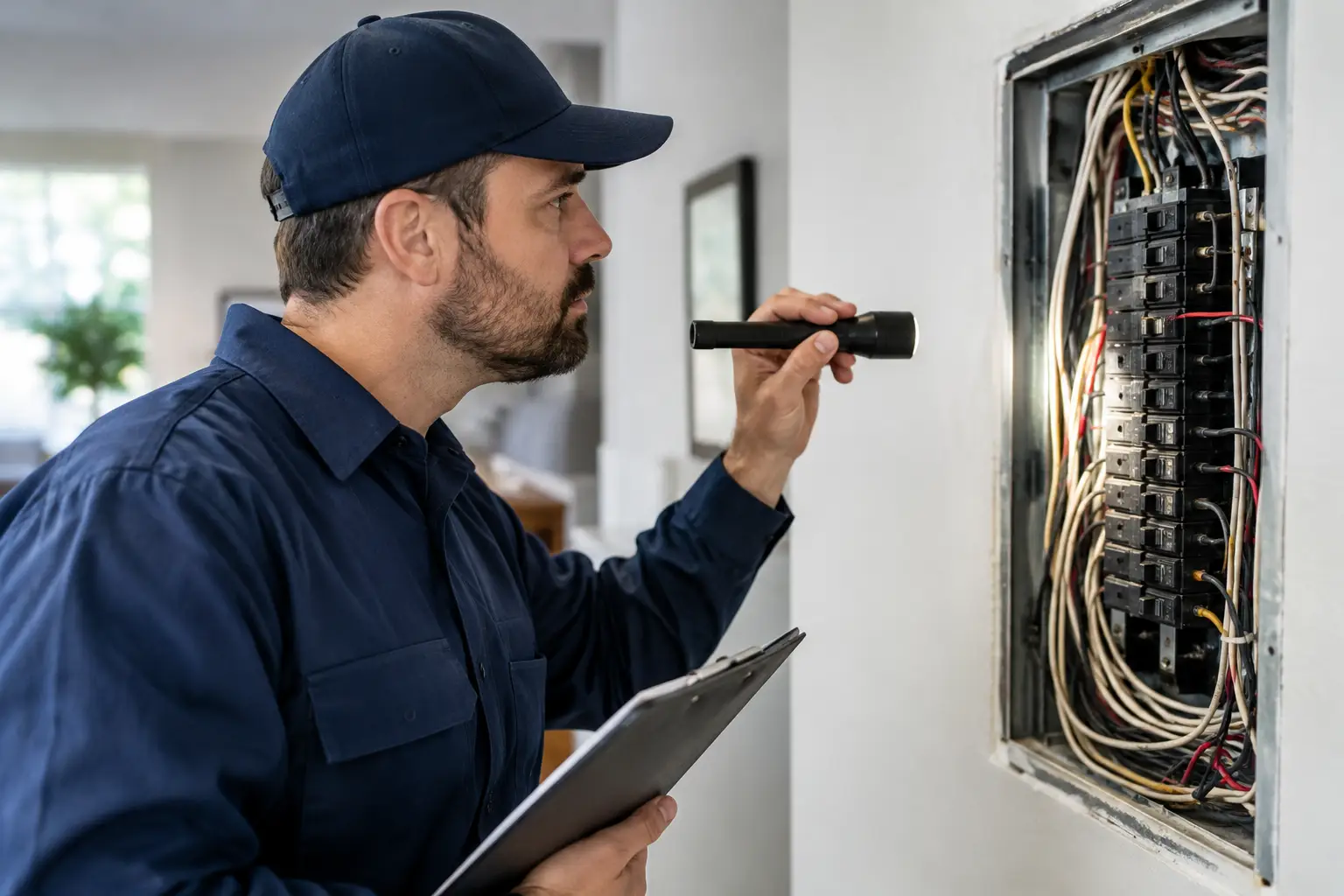
The insurance process commonly begins with an application, property inspection, or four-point inspection for an older home. The electrical portion generally looks at the panel, wiring type, grounding, visible workmanship, service size, and signs of hazards.
An insurer may ask for the age of the electrical system, but be precise. A home might have a 1940s structure, a 1990s panel, and a recent kitchen rewire. Provide the age of each major component when known rather than describing everything as “old wiring.” Receipts, permits, inspection reports, and clear electrician documentation can make a real difference.
For commercial properties, the review can go further. Facility managers may need to document capacity, maintenance history, emergency systems, code compliance, equipment condition, and whether electrical changes were completed by qualified professionals. A business interruption claim can involve far more than repair costs, so insurers look closely at systems that affect uptime and life safety.
Upgrades That Can Improve Insurability
The right fix depends on the property. Full rewiring is sometimes necessary, but it is not the answer to every inspection finding. A licensed electrician should evaluate the complete system before recommending a scope of work.
A panel upgrade may be enough when branch wiring is sound but the existing panel is obsolete, undersized, corroded, or unsafe. Targeted circuit replacement can make sense where an addition, kitchen, laundry area, dock, or workshop has aged or improperly installed wiring. Whole-home rewiring is often the better long-term decision when multiple circuits are deteriorated, ungrounded, overloaded, or made up of a high-risk wiring type.
Modern safety equipment also matters. Ground-fault circuit interrupters help protect people in wet locations such as bathrooms, kitchens, garages, outdoor areas, and marine environments. Arc-fault protection helps reduce fire risk from dangerous arcing conditions. Whole-home surge protection can protect sensitive electronics and connected appliances from voltage spikes, which are a practical concern during Louisiana storm activity.
Do not treat upgrades as an insurance-only project. The real value is safer daily operation. A properly planned electrical improvement can also support stronger lighting, better appliance performance, smart-home controls, generator readiness, and dependable EV charging.
Avoid These Costly Shortcuts
A low-cost patch can create a larger problem during an inspection or claim. Do not cover old wiring issues with fresh drywall, rely on extension cords as permanent circuits, replace a breaker with a larger size to stop tripping, or make unpermitted electrical repairs. Those actions can increase fire risk and create difficult questions from an insurer.
It is also unwise to tell an insurer the system has been “updated” when only a few visible devices were replaced. A new receptacle does not prove that the conductors, splices, grounding, panel, and service equipment behind it are safe. Accurate documentation protects you.
A Clear Path for Homeowners and Property Managers
Start with a professional electrical safety inspection before you shop aggressively for policies, list a property for sale, or begin a major renovation. Ask for clear findings in plain language: what is safe, what requires attention now, what may affect insurance, and what can be planned for later.
Then share the report with your insurance agent or carrier and ask what documentation they require. If upgrades are needed, get a written scope and transparent estimate from a licensed contractor. After the work is complete, keep final invoices, permits when applicable, photos, and inspection approvals with your property records.
Cajun Current Electrical Services approaches this work the way it should be handled: identify the real condition of the system, complete code-compliant repairs or upgrades, and finish with a safety-focused final review. Better. Faster. Safer.
Old wiring should not leave you uncertain about your coverage or your property’s safety. Get the system evaluated before the next application, inspection, storm season, or electrical failure forces the issue.
Comments