Outlet Sparking Causes and What to Do Next
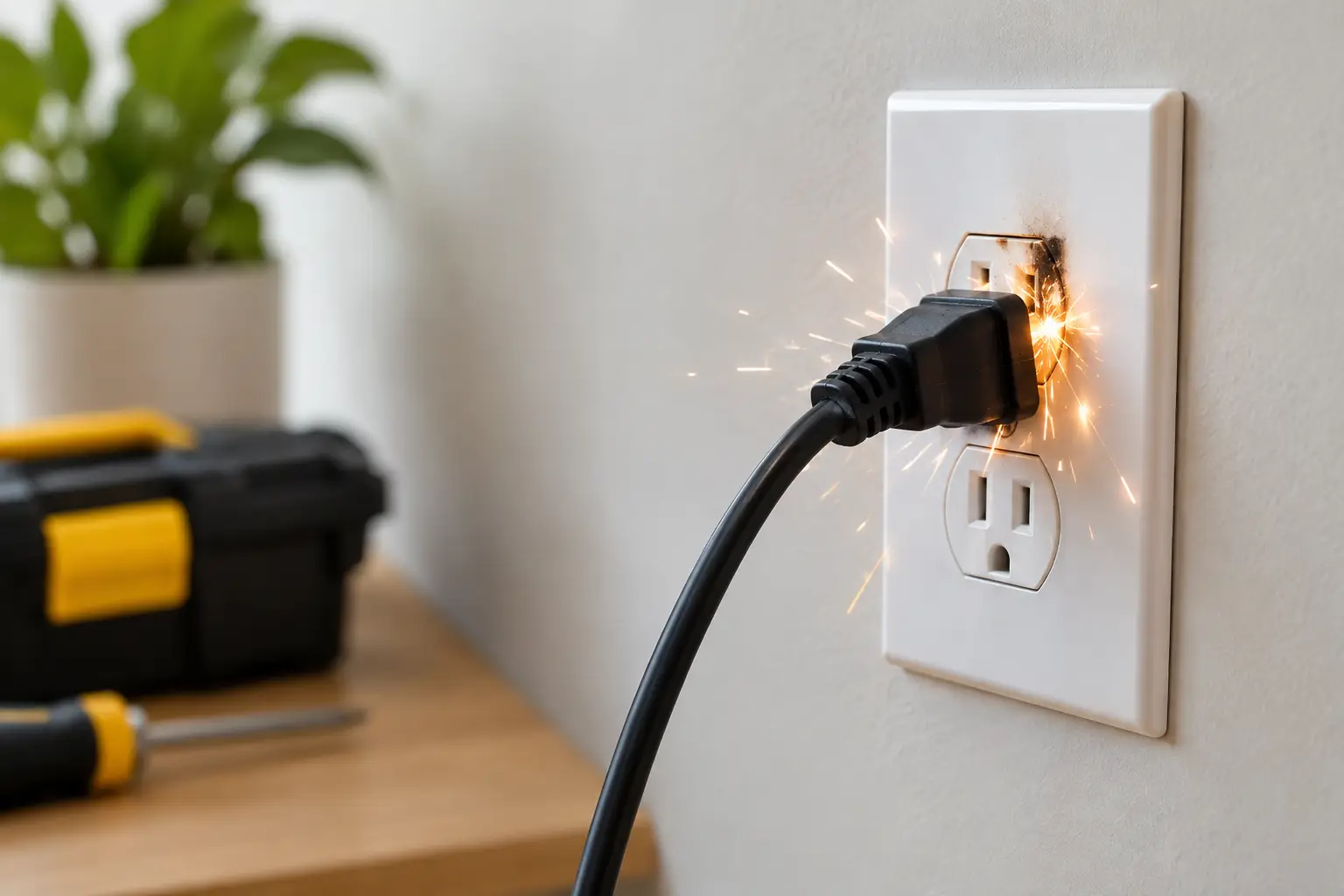
A brief blue spark when you plug in a phone charger can be harmless. A spark that repeats, crackles, leaves a burn mark, or comes with heat and odor is not. Outlet sparking causes can range from normal electrical contact to loose wiring hidden behind the wall. Knowing the difference helps protect your home, facility, vessel, and the people who rely on its power.
Treat an outlet that sparks as a warning sign until you know why it happened. Do not keep testing it, force a plug into place, or assume a power strip will solve the problem. Electricity should work quietly and reliably. When it does not, the safest next step is to stop using the outlet and have the circuit evaluated.
When Is a Spark at an Outlet Normal?
A small, single spark can occur when a plug's metal prongs first contact an energized receptacle. This is most common with devices that draw power immediately, such as vacuum cleaners, window air conditioners, power tools, space heaters, and equipment with motors. The electrical current jumps the tiny air gap for a moment before the connection is fully made.
That quick spark should be small, infrequent, and limited to the moment the plug enters the outlet. There should be no popping sound, no smoke, no burning smell, and no discoloration around the receptacle. The plug should also fit snugly.
If the spark is large or yellow, happens every time, appears after the device is connected, or is accompanied by warmth, stop using both the outlet and the device. What looks minor at the faceplate can point to a connection problem behind it.
Common Outlet Sparking Causes
Loose or worn receptacle contacts
Outlets wear out. Over time, the internal metal contacts can lose their grip on plug prongs, especially on frequently used kitchen, living room, office, workshop, and dock circuits. A loose plug can move while current is flowing, creating intermittent arcing.
Arcing produces heat. That heat can damage the outlet, the plug, and nearby wiring insulation. If a plug slips out easily, feels loose, or only works when positioned a certain way, the receptacle should be replaced by a qualified electrician.
Loose wiring connections
A receptacle is only as dependable as the wire connections behind it. Loose terminal screws, poorly secured conductors, damaged splices, or aging connections can create resistance and arcing inside the electrical box. You may hear buzzing or crackling, see flickering lights, or notice that the outlet works inconsistently.
This is one of the outlet sparking causes that should never be handled by simply tightening something without proper training. The affected circuit must be de-energized, tested, inspected, and repaired using code-compliant methods. In older properties, the electrician may also find deteriorated insulation or wiring that no longer meets the demands placed on it.
Overloaded circuits and high-demand equipment
A single outlet may be asked to supply more power than the circuit was designed to handle. Space heaters, microwaves, portable air conditioners, hair tools, power tools, and commercial equipment can put significant demand on a circuit. Extension cords and power strips can make overload conditions easier to create, not safer.
An overload does not always cause a visible spark at the outlet, but excess heat can weaken receptacles and connections over time. Repeated breaker trips, warm outlet covers, dimming lights when equipment starts, and a burning odor are all signs that the circuit needs attention.
The right fix depends on the load and the building. It may mean moving equipment to a different circuit, installing a dedicated circuit, upgrading the panel, or correcting an improperly shared load. Replacing an outlet alone will not solve a capacity problem.
Damaged plugs, cords, or appliances
Sometimes the outlet is not the source of the trouble. Bent plug blades, cracked appliance cords, damaged insulation, loose charger blocks, and worn power-tool cords can create a poor connection and spark as they are inserted. Moisture and corrosion can accelerate the damage, particularly in garages, outdoor areas, coastal properties, and marine environments.
Unplug the device only if it can be done safely and without touching damaged wire or metal. Inspect it for fraying, scorch marks, looseness, or deformation. Do not use a damaged cord or plug again until it has been properly repaired or replaced.
Moisture, corrosion, and contamination
South Louisiana humidity, wind-driven rain, flooding, salt air, and condensation can all affect electrical equipment. Outdoor outlets, dock pedestals, garage receptacles, kitchens, bathrooms, laundry rooms, and crawl spaces deserve particular attention. Moisture can create a path for current, corrode connections, and cause a short circuit or arcing event.
A sparking outlet near water is urgent. Keep people away, do not touch the outlet or connected equipment, and shut off power at the breaker only if you can do so safely from a dry location. An electrician can determine whether the problem is limited to the receptacle or whether water has entered the box, conduit, wiring, or connected equipment.
Improper installation or outdated wiring
Older homes and buildings may contain receptacles, wiring methods, or electrical panels that were not designed for modern loads. DIY repairs and previous work performed without proper inspection can add further risk. Common issues include reverse polarity, missing grounding, incorrect wire terminations, undersized conductors, and incompatible devices installed on the circuit.
A spark may be the first visible symptom, but the deeper issue is often the electrical system's condition. A professional inspection identifies what is present, what is unsafe, and what upgrades will deliver dependable capacity without unnecessary work.
What to Do When an Outlet Sparks
Your response should match the severity of the situation. If there is smoke, flame, a strong burning smell, or visible melting, move people away from the area and call emergency services. Do not use water on an electrical fire. If it is safe to do so, shut off power to the affected circuit at the panel.
For a spark without fire, unplug the device if the cord and outlet are cool and undamaged. Then leave the outlet out of service. Avoid using an extension cord from another room as a permanent workaround. That can shift the load to another circuit and introduce another hazard.
Take note of what happened. Did the spark occur with one appliance or every plug? Was the outlet wet, loose, warm, noisy, or discolored? Did a breaker trip? These details help an electrician diagnose the issue faster and identify whether the fault is at the device, receptacle, circuit, panel, or incoming power source.
Signs You Need Immediate Electrical Service
A licensed electrician should assess the system promptly when an outlet repeatedly sparks or shows signs of heat damage. Call for service if you notice any of the following:
A burning smell, smoke, scorch marks, melted plastic, or a hot outlet cover
Buzzing, crackling, flickering lights, or power that cuts in and out
A breaker that trips repeatedly after you reset it
A loose plug, a damaged receptacle, or a shock or tingling sensation
Water exposure near an outlet, electrical panel, dock connection, or equipment
Do not reset a breaker over and over or replace it with a larger breaker to stop trips. Breakers are safety devices designed to protect the wiring. Repeated tripping means the circuit needs a proper diagnosis.
The Repair Should Address the Cause
Safe electrical work is more than changing a faceplate. A proper service call starts with testing and inspection, followed by a clear explanation of the issue and repair options. Depending on the findings, the solution may involve replacing a worn receptacle, repairing wiring connections, installing GFCI or AFCI protection where required, adding a dedicated circuit, correcting panel issues, or planning a larger upgrade.
For homeowners and facility managers, the goal is not merely to make the spark disappear. It is to restore reliable power, protect the property, and reduce the chance of a more serious failure. Cajun Current Electrical Services brings that disciplined approach to South Louisiana electrical troubleshooting: licensed work, clear recommendations, code-compliant repairs, and a final safety-focused review.
A sparking outlet is your electrical system asking for attention. Take it seriously, keep the outlet out of use, and have the cause corrected before a small warning becomes a costly interruption.
Comments