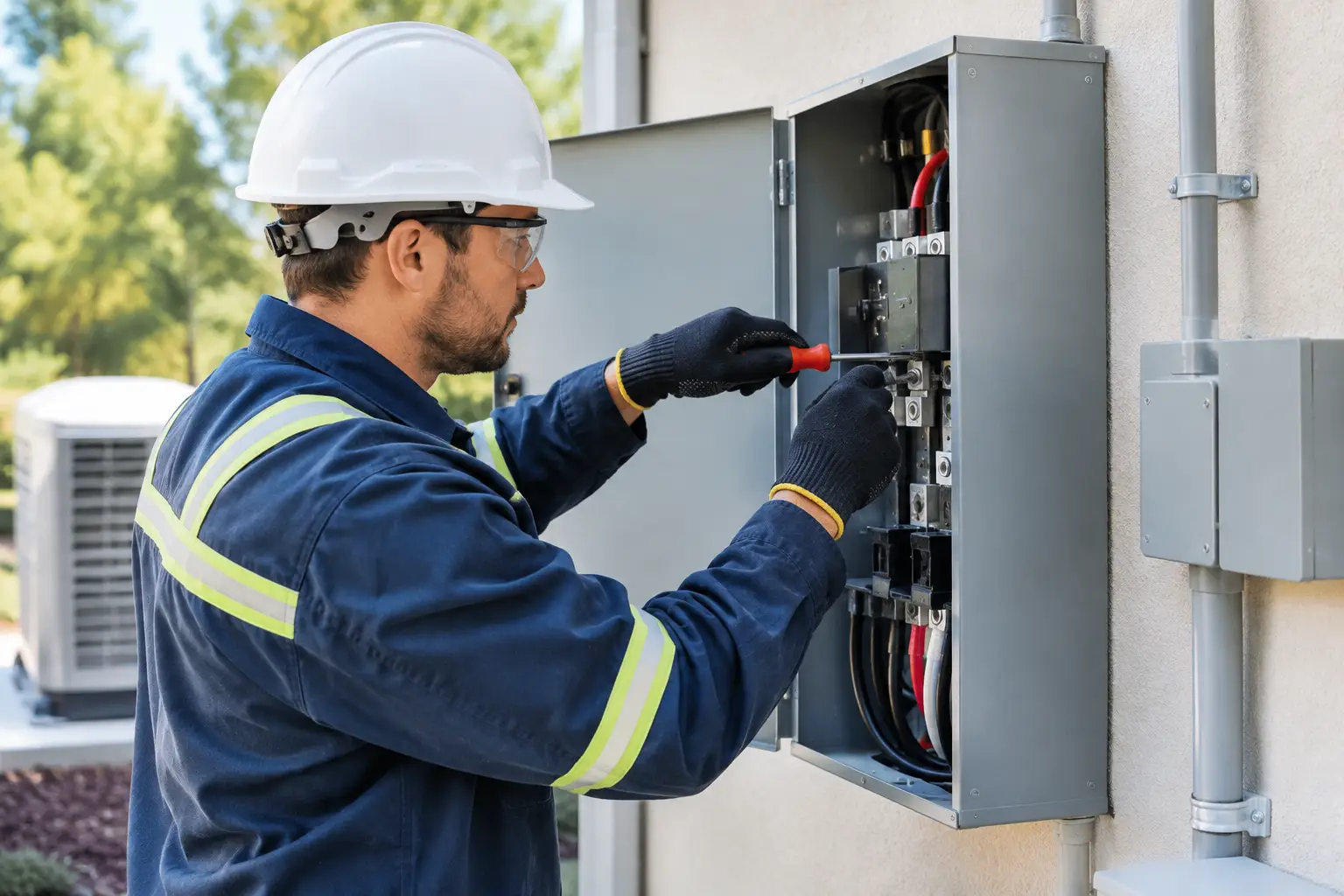
Generator Transfer Switch Installation Done Safely
A generator can keep the lights on after a South Louisiana storm, but it cannot protect your property if it is connected the wrong way. Generator transfer switch installation is the controlled, code-compliant way to bring backup power into a home, business, or critical facility without putting occupants, equipment, or utility crews at risk.
A properly installed transfer switch does more than make outages less disruptive. It prevents dangerous backfeed, gives you a clear plan for which circuits stay live, and makes generator operation faster when the weather turns. That is the difference between backup power that works when needed and an emergency setup that creates a second problem.
What a Transfer Switch Does During an Outage
Your building normally receives power from the utility. A transfer switch safely separates that utility supply from your generator supply, so only one source can feed the electrical system at a time. When utility power fails, the switch transfers selected loads, or in some cases the entire service, to generator power. When utility service returns, it transfers the building back safely.
This isolation is critical. Plugging a generator into a dryer outlet, range outlet, or any other receptacle can send power backward through the electrical system and onto utility lines. That practice, often called backfeeding, can electrocute lineworkers, damage appliances, overload wiring, and create a fire hazard. It is not a shortcut. It is an unsafe and improper connection.
For homeowners, the transfer switch may power essentials such as refrigeration, lighting, internet equipment, a well pump, select receptacles, and a properly sized HVAC system. For commercial facilities, the scope may include life-safety equipment, communications, refrigeration, medical operations, security systems, IT hardware, or process equipment. The right design depends on what must remain operational and what the generator can actually carry.
Choosing the Right Generator Transfer Switch Installation
There is no one-size-fits-all transfer switch. The right equipment is determined by the generator type, electrical service, required loads, and whether the system must operate automatically.
A manual transfer switch is commonly paired with a portable generator. During an outage, the owner starts the generator, connects it through a dedicated inlet, and manually moves the switch to generator power. This option can be a practical choice for a home that only needs selected circuits covered during shorter outages.
An automatic transfer switch, or ATS, is usually installed with a permanent standby generator. It detects a utility outage, signals the generator to start, transfers the load after the generator stabilizes, and returns the system to utility power when service is restored. For businesses, medical facilities, occupied rental properties, and homeowners who may be away when an outage occurs, that automation can be worth the investment.
A service-rated transfer switch may be appropriate when the equipment is installed at the service entrance and is designed to handle the full service load. In other situations, a dedicated emergency subpanel or selected-circuit transfer switch is the better fit. The choice affects cost, capacity, installation complexity, and how much of the property can run on backup power.
An interlock kit can also be an approved option when it is listed for the specific electrical panel and installed correctly. It mechanically prevents the main breaker and generator breaker from being on at the same time. It is not interchangeable with every panel, and it still requires correct generator inlet wiring, overcurrent protection, labeling, and professional evaluation.
Size the System Around Real Loads
Generator capacity should be planned around actual demand, not guesses. Large motor loads, including central air conditioners, pumps, compressors, and refrigeration equipment, can draw much more power at startup than while running. An undersized generator may trip breakers, stall equipment, or fail to carry the loads that matter most.
An electrician reviews the service size, panel condition, voltage requirements, existing loads, and equipment nameplates. For a home, that may mean deciding between essentials-only backup and whole-home coverage. For a commercial property, it may mean identifying priority loads and adding load-shedding controls so the generator does not become overloaded when equipment cycles on.
This planning is especially important in older homes and buildings with crowded panels, aluminum branch wiring, aging breakers, or previous unpermitted work. A transfer switch installation may reveal that a panel upgrade, grounding correction, or circuit repair should happen first.
What Professional Installation Should Include
Generator transfer switch installation is electrical work that affects your entire power system. It should be completed by a licensed electrician who understands local permitting requirements, the National Electrical Code, generator manufacturer instructions, and the site conditions unique to your property.
A disciplined installation process includes four important phases:
1. Consultation and load review. The electrician identifies the circuits or equipment to be backed up, verifies generator capacity, inspects the panel, and provides a clear scope and estimate.
2. System planning. This includes selecting listed equipment, determining conduit and conductor routes, planning the generator inlet or standby generator connection, and addressing permits and utility requirements.
3. Expert execution. The transfer switch, breakers, inlet box, wiring, grounding and bonding components, labels, and protective devices are installed to code and manufacturer specifications.
4. Final safety audit and testing. The system is tested under controlled conditions to confirm proper transfer operation, correct circuit identification, safe utility isolation, and reliable return to normal power.
For a standby system, the work may also involve coordinating fuel supply, generator placement, clearances, pad requirements, and control wiring. A generator placed too close to doors, windows, vents, or combustible materials can create serious carbon monoxide and fire risks. Electrical installation and generator placement must work together.
Permits, Inspections, and South Louisiana Conditions
Permits are not paperwork for paperwork's sake. They create an independent check that the installation is safe, listed, and appropriate for the service. Requirements vary by parish and municipality, and some projects require coordination with the utility or additional review for commercial and industrial facilities.
South Louisiana also presents conditions that deserve attention. Flood exposure, wind-driven rain, corrosion, heat, and salt air near coastal areas can shorten the life of poorly selected equipment. Outdoor enclosures need the right rating for the location, conduit entries must be sealed correctly, and equipment should be installed at a suitable elevation where flood risk applies.
For marine properties and docks, the stakes are even higher. Electrical systems near water require specialized design, proper grounding, and equipment intended for that environment. Generator backup should never be added to a dock or vessel-related electrical system as an afterthought.
Common Mistakes That Put Backup Power at Risk
The most dangerous mistake is backfeeding through a receptacle. Others are less obvious but still costly: using an extension cord as a permanent solution, selecting a generator based only on running watts, skipping load calculations, installing a transfer switch without correcting panel defects, or failing to exercise the system after installation.
Fuel planning matters too. A portable generator needs safe fuel storage and a realistic refueling plan. A standby generator using natural gas or propane needs adequate fuel supply under load, not just enough capacity on paper. If the generator will support sensitive electronics, the quality of power and surge protection should also be considered.
Once installed, backup power equipment needs periodic testing. Run the generator according to manufacturer guidance, verify transfer operation, inspect cords and inlet connections, and keep the generator area clear. Standby units should receive scheduled maintenance, including battery checks, fluid service, and load testing when appropriate.
Build Backup Power Before You Need It
A transfer switch is not the most visible part of a generator system, but it is one of the most important. It is the safety barrier between utility power and generator power, and it determines whether your backup plan is controlled or chaotic.
Cajun Current Electrical Services can assess your property, define the loads that matter, and install a code-compliant backup power connection built for the conditions you face. Before the next outage puts your plans on hold, choose equipment and workmanship that can power your progress safely.
Comments