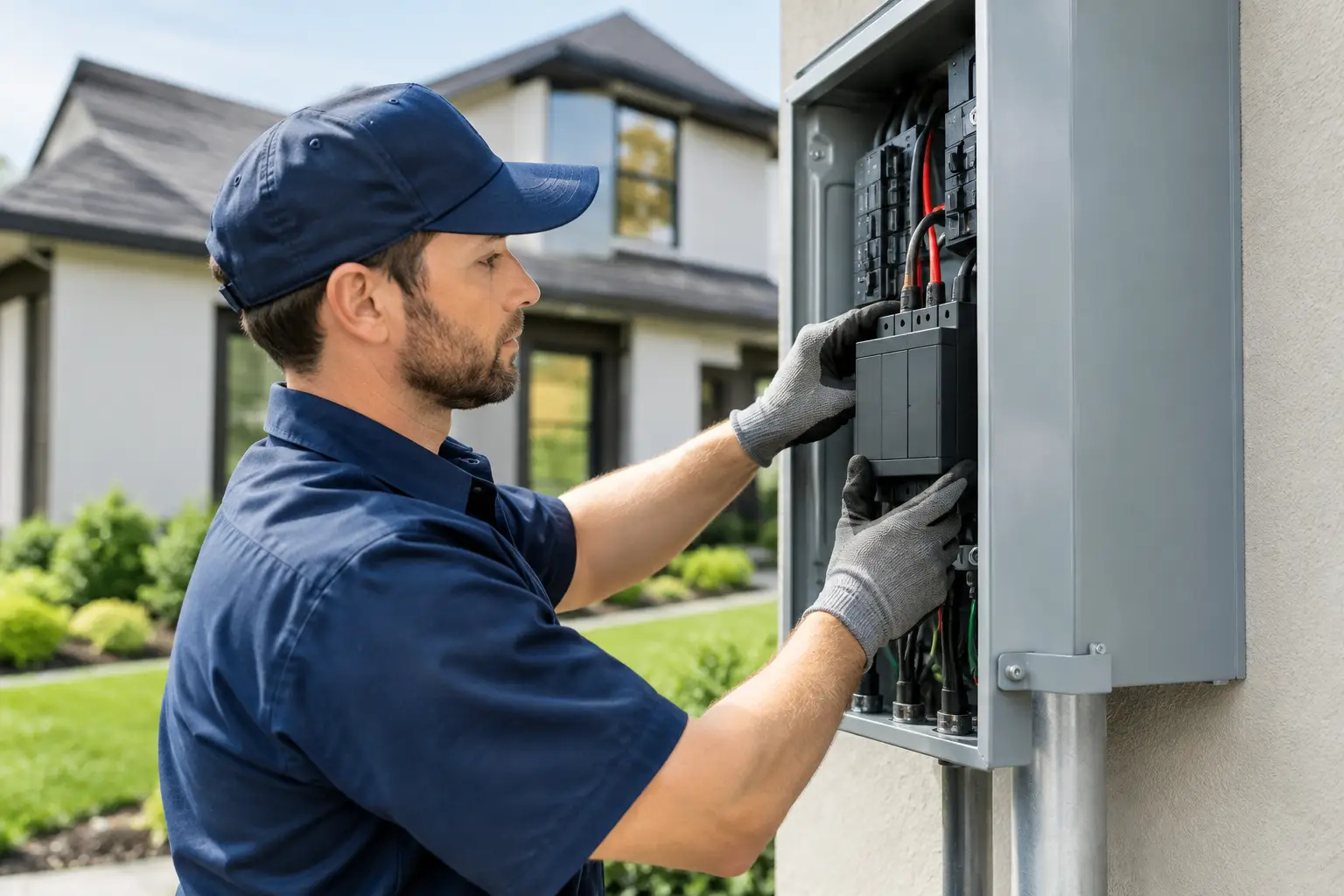
Whole House Surge Protection That Works Hard
A lightning strike does not have to hit your roof to damage your electronics. A nearby strike, a utility switching event, or a sudden return of power after an outage can send excess voltage through the electrical system. Whole house surge protection gives that surge a safer path before it reaches the appliances, controls, and equipment your property depends on.
For South Louisiana homeowners and property managers, this is more than a convenience upgrade. Our weather brings frequent lightning, while outages and restoration events can put added stress on sensitive electronics. A professionally installed surge protective device at the electrical panel helps protect the systems that keep daily life and business moving.
What whole house surge protection does
A whole-house surge protective device, often called an SPD, is installed at or near the main electrical panel. Its job is to detect a sudden voltage spike and divert much of that excess energy safely to the grounding system. Under normal conditions, it stays in the background. When a surge occurs, it responds in fractions of a second.
This first line of defense helps reduce exposure across circuits throughout the building. That includes hardwired equipment that cannot be plugged into a power strip, such as HVAC systems, water heaters, garage door openers, well pumps, appliances, lighting controls, security equipment, and EV chargers.
It does not make equipment invincible. No electrical device can guarantee protection from every extreme event, especially a direct lightning strike or an improperly grounded system. What it does provide is a major layer of defense against the routine and severe voltage disturbances that can shorten equipment life or cause immediate failure.
Why power surges are a bigger issue than most people realize
Many people picture a surge as one dramatic lightning event. Lightning is a serious concern in coastal Louisiana, but smaller internal surges happen far more often. Motors and compressors in air conditioners, refrigerators, pumps, and other equipment can create switching transients as they start and stop. Utility operations and power restoration after an outage can create additional spikes.
The damage is not always obvious. A major surge may destroy a circuit board immediately. Smaller repeated surges can slowly weaken electronic components. Your smart thermostat may begin acting erratically. A refrigerator control board may fail early. A television, router, or office workstation may lose reliability long before its expected service life.
Modern properties have more electronics connected to their electrical systems than ever. Homes now rely on smart panels, Wi-Fi equipment, automated lighting, cameras, connected appliances, and EV charging. Businesses may depend on point-of-sale systems, network hardware, access control, refrigeration controls, medical equipment, and industrial automation. Those systems support real work. They deserve more than hope as a protection plan.
Panel protection and plug-in protection work together
Whole house surge protection is not a replacement for quality point-of-use protection. The strongest approach is layered.
The panel-mounted device handles surges entering through the electrical service and reduces exposure across the building. Plug-in surge protectors add another level of protection at sensitive electronics, including computers, televisions, network equipment, audio systems, and office hardware. For cable, phone, antenna, or data lines, appropriate protection may also be needed because a surge can enter through more than the electrical panel.
Think of it as protecting the property at the front door, then giving critical devices their own added defense. For a home, that may mean a panel SPD plus protection for entertainment systems and home-office equipment. For a commercial facility, it may mean protection at the service, selected subpanels, and critical equipment locations. The right design depends on the building, the equipment, and the consequences of downtime.
When to consider a whole-house surge protector
A panel upgrade is one of the best times to add whole house surge protection because the electrician already has access to the service equipment. It is also a smart addition during a renovation, generator installation, smart-home upgrade, or EV charger project.
Do not wait for a project if your property has frequent outages, visible storm exposure, expensive electronic equipment, or recurring unexplained equipment failures. A surge protection evaluation can also make sense after lightning-related damage in the neighborhood, even if your own equipment appears to be working.
For businesses, the question is often simpler: what does one hour of lost equipment or interrupted operations cost? If a voltage event can stop sales, spoil inventory, interrupt communications, affect tenant comfort, or disable critical controls, electrical protection should be part of the facility plan.
The installation details matter
Surge protection is only as effective as the system supporting it. A licensed electrician should verify panel capacity, breaker requirements, device ratings, placement, wiring length, and grounding and bonding conditions. Short, properly sized connections help the device perform as intended during a surge.
Grounding deserves special attention. The surge protective device redirects excess energy, but the grounding system must provide a safe route for it. If grounding electrodes, bonding connections, or panel conditions are inadequate, installing an SPD alone may not deliver the protection you expect.
The device itself should also be selected for the application. Residential service equipment, large commercial panels, marine electrical systems, and facilities with sensitive electronics do not always need the same solution. Some devices include status indicators or alarms so owners can see whether protection remains active. That matters because a surge protector can sacrifice itself during a major event while protecting the equipment behind it.
What whole house surge protection will not fix
Surge protection does not correct overloaded circuits, loose connections, damaged wiring, improper grounding, or a failing electrical panel. It also will not keep the lights on during an outage. For backup power, a properly designed generator or battery system addresses a different need.
It is also not a reason to ignore equipment maintenance. An aging HVAC unit, corroded outdoor disconnect, water-damaged panel, or improperly installed EV charger needs direct repair. Safety starts with sound electrical infrastructure, then builds outward with protective devices and planned upgrades.
That distinction is useful when comparing quotes. The lowest-cost device is not automatically the best value if the installer skips the inspection work that makes it effective. Professional installation should include a clear look at the panel, the grounding system, applicable code requirements, and the equipment you want to protect.
A practical protection plan for South Louisiana properties
For most homes, start with a panel evaluation and a quality whole-house SPD installed by a licensed electrician. Add plug-in protection for sensitive electronic devices, and replace low-quality power strips that offer little or no real surge protection. If you have a generator, solar equipment, an EV charger, a smart-home system, or valuable electronics, ask for a plan that accounts for those systems specifically.
Commercial and industrial properties may need a more detailed approach. Service entrance protection can be paired with protection at downstream distribution panels and critical loads. Facilities with data, communications, security, refrigeration, automation, or medical equipment should evaluate every path a surge could take into the operation.
At Cajun Current Electrical Services, the process begins with the property, not a one-size-fits-all device. The goal is clear: code-compliant work, transparent recommendations, and a final safety-focused review that supports reliable power. Better. Faster. Safer.
A surge may last only a moment, but its effects can disrupt a property for days. Put protection in place before the next storm, outage, or power event decides which equipment is most vulnerable.
Comments